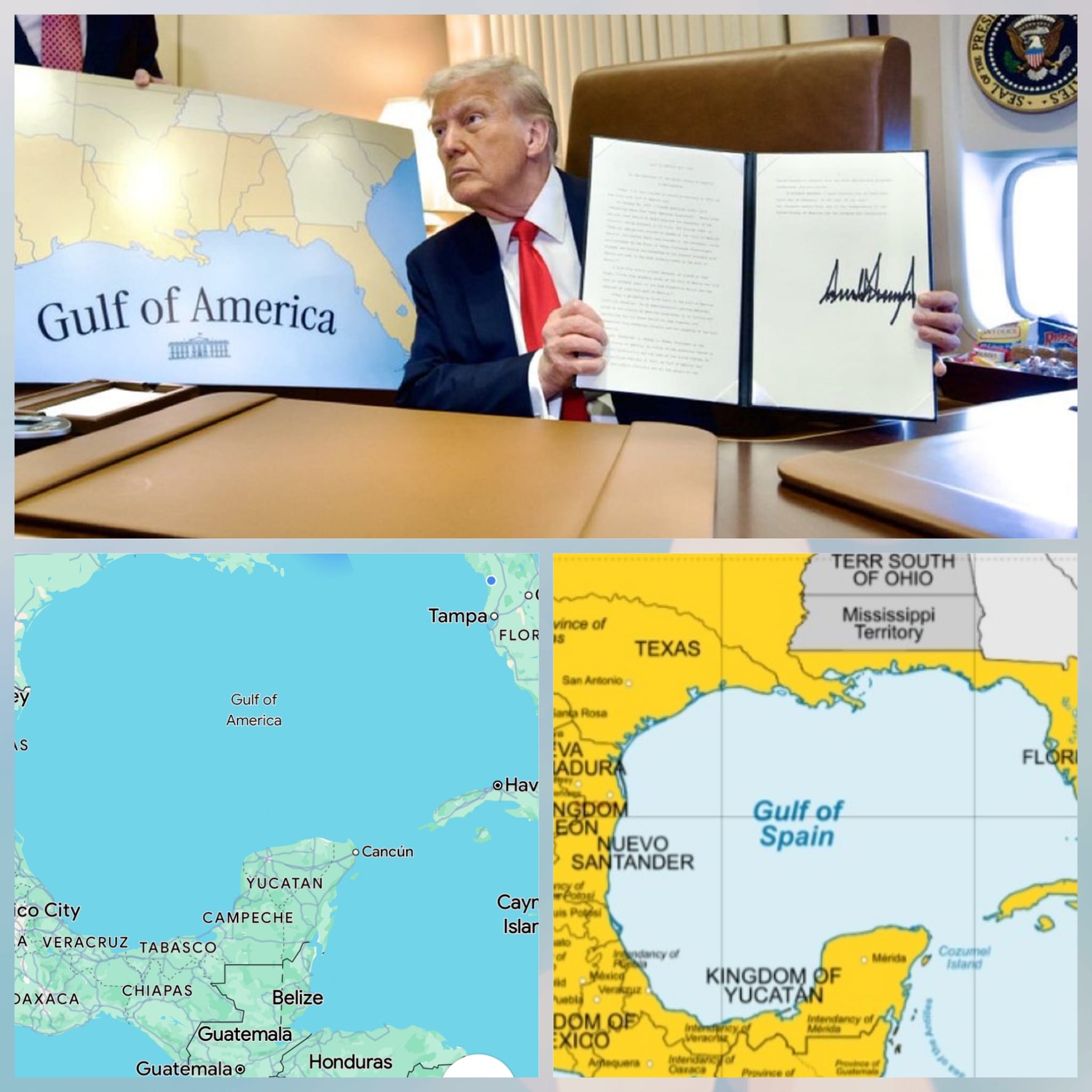
Since I proudly live on the Gulf of America, it was interesting to observe the kerfuffle in the media. Now, over a year later, it still pops up in interesting conversations. As for the fans and detractors, as usual, there's a lot of uninformed rhetoric. Then and now, I was — and remain — happy to put my 2 cents in (plus a few bucks' worth) with a fact check on the matter.
The gulf took shape approximately 300 million years ago as a result of plate tectonics. The gulf's name ultimately derived from Mexica, the Nahuatl term for the Aztecs. Though there is no formal protocol on the general naming of international waters, the Gulf of Mexico was officially recognized by the International Hydrographic Organization — which seeks to standardize the names of international maritime features and counts all three adjacent countries (USA, Mexico, Cuba) as member states. However, in 2020 the IHO agreed to replace names with numerical identifiers, which has led to considerable debate about what to call certain bodies of water — raising concerns about its impact on education, tourism, and national identity.
Early 16th-century maps by Juan de la Cosa and Martin Waldseemüller depicted the gulf but left it unlabeled. It has gone by a remarkable number of names over the centuries:
The name "Gulf of Mexico" first appeared on a world map in 1550 and in a historical account in 1552. It became the most common name from the mid-17th century onward — when it was still considered a Spanish sea. French Jesuits were using it as early as 1672.
In December 2023, the World Court issued a decision giving nations sovereignty over waters above their land shelves — ruling they were not international waters. This is the legal foundation everything else rests on.
On his first day in office, President Trump issued Executive Order 14172 ordering the Gulf of Mexico to be renamed the Gulf of America. He later signed a proclamation declaring February 9 as the inaugural "Gulf of America Day."
Those new maps will set the latitude and longitude of where our border begins — the Gulf of America — so all maritime traffic knows when they are leaving international waters. This is most importantly about strengthening our borders and ensuring all maritime traffic understands the changes that happened in 2023. Putting legal protections in place to help enforce any military actions or incursions in the future.
How many people do you think realized the US grew by thousands of square miles?
The total coastline bordering the Gulf spans approximately 5,000 miles across three nations:
The Gulf itself covers approximately 600,000 square miles (1,550,000 km²). And notably — it's named the Gulf of America, not the Gulf of the United States. The Americas as a whole covers approximately 16,429,000 square miles — about 28% of Earth's total land surface, home to over one billion people.
So the largest gulf on the planet, named after the largest continent on the planet, kinda makes perfect sense. Besides — Gulf of New Spain is so very 16th century.
This is where knowing what's actually happening in the world helps you filter out the drama and understand the legalities in your own country. Knowing the history, the legal context, and the actual geography puts you miles ahead of the shouting heads on either side.
Now you know. 😁